

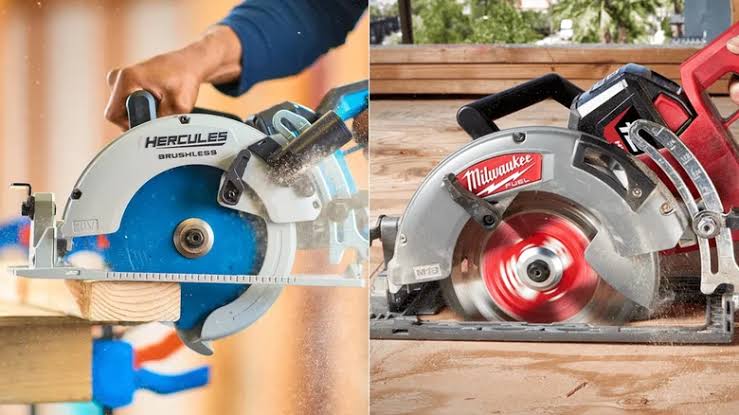
A Practical Comparison of Power, Portability, and Long-Term Value for Trade Professionals
The debate between corded and cordless tools has been running in the trade industry for decades. What has changed is the competitive landscape. Battery technology has advanced to the point where the performance gap between platforms has narrowed significantly—and for many applications, closed almost entirely.
For tradespeople evaluating circular saws specifically, the right platform choice depends on work environment, cutting volume, material type, and how the tool integrates with existing equipment investments. Neither platform is universally superior; both offer genuine advantages that map to specific professional scenarios.
How Do Corded Circular Saws Perform Under Sustained Heavy Use?
Corded circular saws draw power directly from the electrical supply, which means performance does not degrade as a battery depletes. For operations involving continuous high-volume cutting—framing an entire floor system, ripping long stock repeatedly, or cutting dense materials for extended periods—corded saws deliver consistent blade speed from the first cut to the last.
What Are the Real Advantages of Corded Saw Power Delivery?
The electrical supply connected to a corded saw provides power without the weight of a battery pack attached to the tool. This matters most in sustained overhead cutting, where tool weight directly affects operator fatigue. A lighter saw held above shoulder height for extended periods places measurable physical strain on the user.
Corded saws also eliminate downtime associated with battery charging. On sites with reliable electrical access, a corded saw is always ready without planning around battery charge cycles or carrying additional battery packs.
Where Do Corded Circular Saws Create Operational Limitations?
Cord management on active job sites is a practical challenge. Extension cords crossing traffic areas create trip hazards. Long cord runs reduce effective voltage at the tool, which affects motor performance. Working on multiple floors or in areas without convenient electrical access requires planning that cordless tools simply eliminate.
The physical constraint of the cord also limits how freely the operator can move. Rotational cuts, long diagonal rips, and work in confined spaces all require the operator to actively manage cord position—an additional cognitive task during cutting.
How Has Cordless Circular Saw Technology Evolved for Professional Use?
Early cordless circular saws sacrificed performance for portability. Battery capacity and motor efficiency have both improved substantially, and current high-voltage cordless platforms deliver cutting performance that handles most professional demands without the limitations of early generations.
What Battery Platform Features Matter Most for Tradespeople?
Battery voltage determines the power ceiling of a cordless tool, while amp-hour rating determines how long the battery sustains that power level. High-voltage platforms combined with high-capacity batteries provide the sustained cutting performance that professional trades require.
Battery platform compatibility within a brand ecosystem is a significant practical consideration. A tradesperson who uses multiple tools from a single battery platform can share batteries across drills, drivers, lights, and saws. This reduces total equipment investment and simplifies logistics compared to managing separate battery types for different tools.
Does a Cordless Circular Saw Perform as Well as a Corded Model in Timber Framing?
For most timber framing applications, current high-voltage cordless saws perform at a level that completes professional framing work effectively. Motor speed under load—the critical measure for cutting through thick dimensional lumber—has improved to the point where many experienced framers have transitioned entirely to cordless platforms.
The scenario where corded saws maintain a measurable performance advantage is sustained, continuous cutting with minimal pauses. If battery charge depletes faster than it can be rotated through a charging system, corded operation remains the more reliable choice for that specific workflow.
Total Cost of Ownership: Evaluating the Real Financial Commitment
Purchase price is only one component of the financial comparison between corded and cordless circular saw platforms. Consumables, maintenance, replacement costs, and equipment longevity all factor into the true cost of each platform over a professional career.
How Does Battery Replacement Cost Affect the Long-Term Value of Cordless Tools?
Battery packs have finite charge cycles before capacity degrades to the point where replacement is necessary. For tradespeople who use cordless tools intensively every workday, battery replacement becomes a recurring operational cost.
The total investment in a cordless platform—including the initial tool cost, multiple battery packs, and charging infrastructure—typically exceeds the cost of an equivalent corded tool. The return on that investment comes from the productivity gains, mobility benefits, and reduction in cord-related hazards that cordless operation provides.
What Maintenance Differences Exist Between Corded and Cordless Saws?
Corded saws with brushed motors require periodic brush replacement, which is a straightforward maintenance task that restores motor performance. Cordless saws using brushless motors require minimal internal maintenance, as the absence of brushes eliminates the primary wear component in motor assemblies.
Both platforms benefit from regular blade inspection, guard mechanism cleaning, and base plate maintenance. A properly maintained saw of either type provides reliable service across years of professional use.
Making the Platform Decision Based on Your Specific Work Environment
The practical choice between corded and cordless comes down to where and how the saw will be used most often.
Job sites with consistent electrical access, high daily cutting volume, and minimal mobility requirements favor corded operation. Remote work sites, multi-floor construction, renovation work in occupied buildings, and scenarios where cord management presents a hazard all favor cordless.
Many experienced tradespeople maintain both platforms—a corded saw for high-volume stationary work and a cordless saw for mobility-dependent tasks. This approach extracts the specific advantages of each configuration while maintaining flexibility across the range of cutting scenarios that professional work presents.
The investment in quality equipment, regardless of platform, pays dividends through reliable performance, accurate cuts, and a tool that supports rather than limits the tradesperson who depends on it every day.

